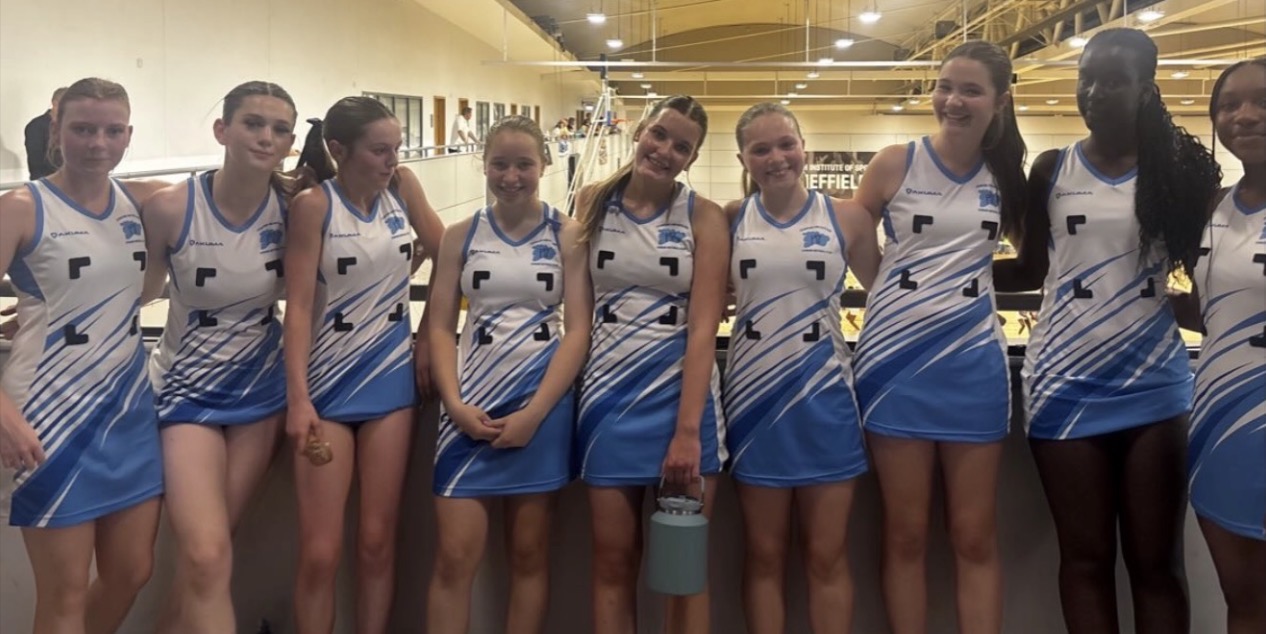
As i10’s CEO and the team’s proud sponsor, I had the privilege of watching Stamford & Rutland’s fabulous U14s compete at the National Tournament. They finished 17th of 18 – but the underlying data tells a very different story!
The scale of the achievement
Stamford & Rutland draws from a combined catchment of around 62,000 people. The 17 other teams at Nationals draw from communities that are, on average, 11 times larger than ours. The tournament’s eventual winner, Kingsway Power, has a catchment roughly sixteen times our size. Shan NTA and Leeds Athletic each draw from populations more than thirty times bigger. Most of the other clubs are established elite academies that regularly compete on the national stage.
Reaching Nationals from a base of 62,000 is, on its own, a huge achievement. Doing it in a field of clubs drawing from millions is the context for everything that follows.
A winning statement
Arguably, the single most meaningful result of the tournament was the 30-20 win over Lincoln City. Lincoln pipped us by 1 goal in the Regionals, and only won the regional title on a disputed points deduction. Our girls beat them by ten goals. That wasn’t just a tournament victory. It was a correction of the regional standings delivered on the national stage – complete vindication that the runners-up label understated this team’s actual strength.
Competing with the country’s best
A few specific moments deserve to be remembered:
- Q4 against Oldham (eventual national runners-up) – drawn 6-6. Drawing a quarter with the side that finished 2nd in the country is the moment of the tournament. It happened. It’s on the scoresheet. It can’t be taken away.
- Three of the four quarters against Turnford (eventual 7th) – within 1-2 goals each. A team finishing in the top third went toe-to-toe with us for most of that match.
- The Sheffield Steel game (drawing from a city 19 times our size) – still in the balance at half-time.
These aren’t moral victories. They’re real competitive moments against teams that should, structurally, have been operating at a higher level.
How we compared to the teams on our borders
Two clubs in particular are worth a moment of comparison.
- MK Dons, a name that needs no introduction in our area, finished 14th, just three places above us. Their only tournament win, like ours, was against Lincoln. With a Milton Keynes catchment roughly ten times the size of ours, the structural gap should have produced a much wider gap on the scoresheet. It didn’t.
- Turnford, another club with a strong local reputation located just outside of London, finished 7th. They beat us 25-12, but the quarter-by-quarter detail tells a different story: we lost Q1 by 2, Q3 by 2, and Q4 by 1. Three quarters of close, competitive netball against a top-tier “big club” – they got us in Q2, but the rest of the game was even.
The grass isn’t greener
Sometimes, parents are tempted to chase the dream and move talented players to clubs in neighbouring regions – MK Dons in the South region, Turnford in the East region, Sheffield Steel in Yorkshire & Humberside, among others. Places with longer-established academies, larger budgets, and reputations that claim a faster path to elite netball.
The results from this tournament tell a different story.
- We outperformed both Turnford (7th) and Sheffield Steel (15th) against Oldham, the eventual national runners-up. They lost to Oldham by 15 and 23 goals respectively; we lost by 12.
- Across the whole tournament, our girls scored 108 goals – just one fewer than Sheffield Steel’s 109, a club drawing from a city nineteen times the size of ours. The same offensive volume as an established club from a major city.
- Both we and MK Dons beat Lincoln in our single tournament win. We scored 30 goals against Lincoln; MK Dons scored 29.
- None of these three “bigger” clubs cracked the top six.
This weekend, against the same opposition, we matched them at times – and, in some games, we outperformed them. The grass isn’t greener. Not on the evidence we gathered in Sheffield.
The girls who stay, develop, and lead this club through the next age groups will be part of something truly exciting.
The gap is smaller than it looks
The MK Dons point bears looking at more closely. They finished 14th; we finished 17th – three places apart in the standings. But put the full sets of results side by side:
| Stat | MK Dons (14th) | S&R (17th) |
|---|---|---|
| Wins | 1 | 1 |
| Losses | 6 | 6 |
| Win against | Lincoln (29-13) | Lincoln (30-20) |
| Total goals scored | 111 | 108 |
| Total goals conceded | 173 | 185 |
| Average margin per game | −8.9 | −11.0 |
Same record. Same single opponent beaten. Three goals’ difference across an entire tournament’s scoring. Just over two goals per game in average margin.
The 15-goal gap in overall goal difference is heavily concentrated in two of our games – the Oaksway defeat (−22) and the Shan NTA defeat (−20), both significantly worse than any of our other losses. Bring those two outliers down to the kind of margin we managed in our other games against similar-quality opposition (around −10), and our goal difference would have been better than MK Dons’ across the tournament.
Two outlier games. A handful of specific quarters within those games. That is the difference between 17th and 14th. A much smaller hill to climb than the league table makes it sound – and the kind of marginal, identifiable improvement the squad can absolutely make next time around.
Delving deeper into the data: the quarter-by-quarter picture
When you look at the tournament a quarter at a time rather than a game at a time, the team’s performance reads better than the results suggest:
- Within 7 goals at the end of 25 of 28 quarters played – 89%.
- Within 3 goals in 13 of 28 quarters – nearly half of all the netball they played was in genuinely close periods.
The picture this paints: for the vast majority of the netball they played, the girls were genuinely in contention. The heavy defeats that pulled the goal difference down were the exception, not the rule – and 17th place doesn’t capture how often the girls were genuinely in the game against established netball clubs. That’s something to be proud of and to build upon.
Going forward
This is a foundation, not a ceiling.
The squad now knows what national-level netball feels like – the pace, the intensity, the type of opposition. That’s experience no coaching session can replicate. Twenty-eight quarters against elite clubs, including the moments of genuine progress (Lincoln, the Oldham Q4, three competitive quarters against Turnford) and the harder lessons, is the kind of exposure that compounds. A player who has held her own against the country’s top eight will approach next season at a different level than one who hasn’t.
The improvements needed to move into mid-pack territory aren’t transformational. They are incremental. Two outlier games, and a handful of specific quarters within them, were the difference between 17th and 14th this year. Girls who build on this experience will arrive at next year’s qualifying campaign sharper, fitter, and with a clearer picture of what awaits at the top end.
The clubs that finished above us mostly have the structural advantage of identifying and developing the best players from among hundreds of thousands of children. We had to find ours among a base of 60,000 people (not children!). The gap that creates is real, but on the day, it was a fraction of what those numbers might have predicted.
Most netball clubs in the country never come within touching distance of a national appearance. This group has been there, looked it in the eye, and matched it for stretches. The job now is to make sure that experience becomes a launchpad, not a high-water mark.
From i10’s perspective, backing this team has, from day one, been about championing the kind of story our business believes in – a side outperforming far larger rivals through skill, grit, and a refusal to be defined by their size. The girls didn’t just live up to that idea this season; they proved it. Which is why we’ll continue to back this team and the journey ahead.
Parents: be proud of what your daughter has been part of. The scoreboard didn’t show it fully, but the performance – the close quarters, the Lincoln win, the Oldham draw, the resilience against structurally larger opposition – is the kind of foundation the club builds the next decade on.
Stamford & Rutland punched above its weight at Nationals. The data backs that up. The work now is to make next year’s data tell a sharper story still.
Well done girls! Here’s to next season!
Mark
CEO, i10